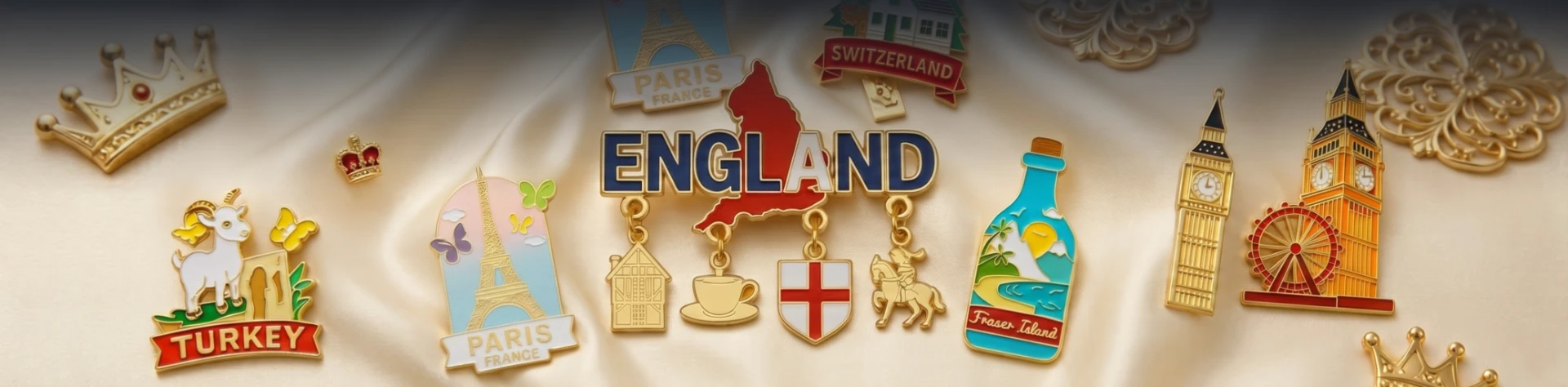
Why Zinc Alloy Works for Detailed Custom Medals
Time : Oct 07, 2026 View : 41
A sculpted mascot, a narrow border and a small event date can compete for space on one medal. For event teams and award distributors, the challenge is keeping those details clear across a whole production run. Zinc alloy offers a useful route, provided the design, casting and finish work together.
How Zinc Alloy Captures Medal Detail
Zinc alloy captures fine medal detail through its fluidity in pressure die casting. In a hot-chamber machine, molten alloy is injected into a reusable steel die, filling narrow ribs, lettering and sculpted recesses before solidifying as one medal body. This lets a zinc alloy medal combine raised and recessed features in a single casting, with the die geometry and controlled filling conditions determining how clearly those details reproduce.
Zamak 3 and Zamak 5 are standard zinc die-casting grades used for detailed custom medals. Zamak 3 offers good castability and dimensional stability; Zamak 5 has a higher copper content, giving it greater strength and hardness. In hot-chamber die casting, the melt is typically held at 410°C–430°C, with the exact setting adjusted to the alloy and equipment. Temperature and injection control help the metal reach fine features before it solidifies.
For custom medals with ribbons, the die can form an integrated top hanging loop or ribbon slot directly in the medal body, avoiding the separate slot-punch tooling that stamped brass may require. Adequate thickness and rounded transitions at the attachment help it carry a heavier 3D medal; molded edge radii followed by deburring help reduce ribbon fraying as the medal moves.
Relatively low casting temperatures also support efficient repeated production. Combined with good fluidity, this makes the process useful for die cast medals carrying contours that would otherwise require a different forming route. The benefit for an event program is a repeatable sculpted design, with less dependence on individually machining its decorative features.
The Mold Gives 3D Relief Its Shape
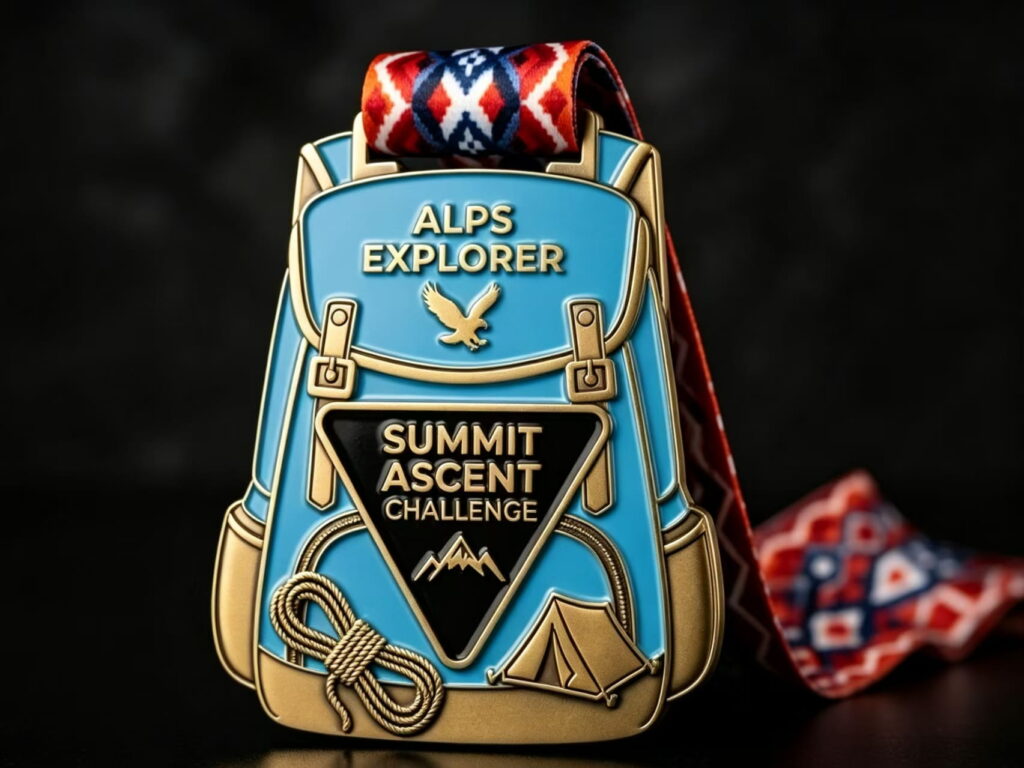
Three-dimensional relief comes from the cavity geometry, not from the alloy creating detail by itself. A crest needs deliberate differences in height between its lettering, emblem and background. If those levels are poorly defined in the tool, a highly castable material cannot turn them into a clear composition.
A practical design separates the medal’s main image from its supporting information. For custom sports medals, consider a runner above a recessed track, with the event name around the rim. Give the runner visual priority and review the date at actual medal size. This is a design judgment, not a fixed minimum-lettering rule.
Draft helps the finished casting leave the die without dragging against its walls. This slight taper matters around raised features and recesses. Abrupt thickness changes can also create uneven solidification and shrinkage porosity, meaning small internal voids. Smooth transitions and balanced sections help the casting process preserve the intended shape.
Extra depth therefore needs a purpose. On custom sports medals, use relief where it makes an athlete, landmark or event symbol easier to recognize. Ask for the proposed profile to be reviewed before treating an attractive front-view rendering as a finished design.
Surface Preparation Makes the Relief Read Clearly
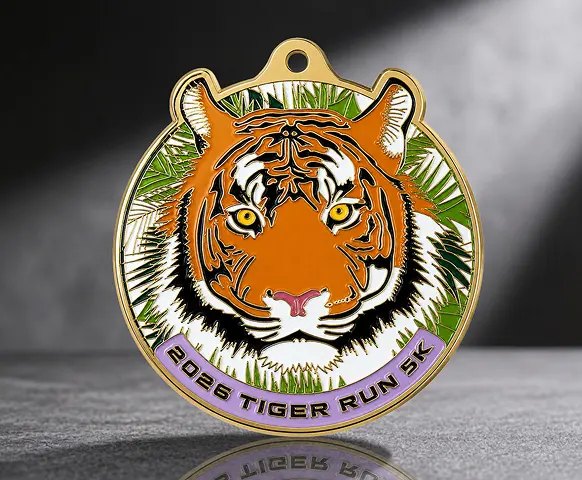
A cast medal still needs surface preparation before its decorative finish. Deburring removes unwanted metal and sharp edges, while polishing improves the surface feel and appearance. These operations should support the design: a clean outer edge matters, but the sculpted lines also need to remain recognizable.
Electroplating adds a surface layer with decorative and protective functions. Zinc alloy can accept a range of finishes, allowing the same underlying design to have different appearances. Gold, silver and bronze finish labels describe the specified surface treatment; they should not be read as proof that the whole medal uses those precious or traditional medal metals.
Finish selection changes how the viewer reads the sculpt. For custom award medals, available options include gold, silver, bronze and antique plating, alongside colored enamel. Compare the finishes on the intended relief rather than choosing solely from a flat color swatch. Check whether the emblem remains distinct from its background.
Long-term appearance depends on the complete finish and its conditions of use. A material name alone cannot establish coating life or scratch resistance. For a display award and a medal worn during an outdoor event, review the relevant finish requirements separately instead of assuming identical exposure.
A Finished Sample Connects the Design to Production
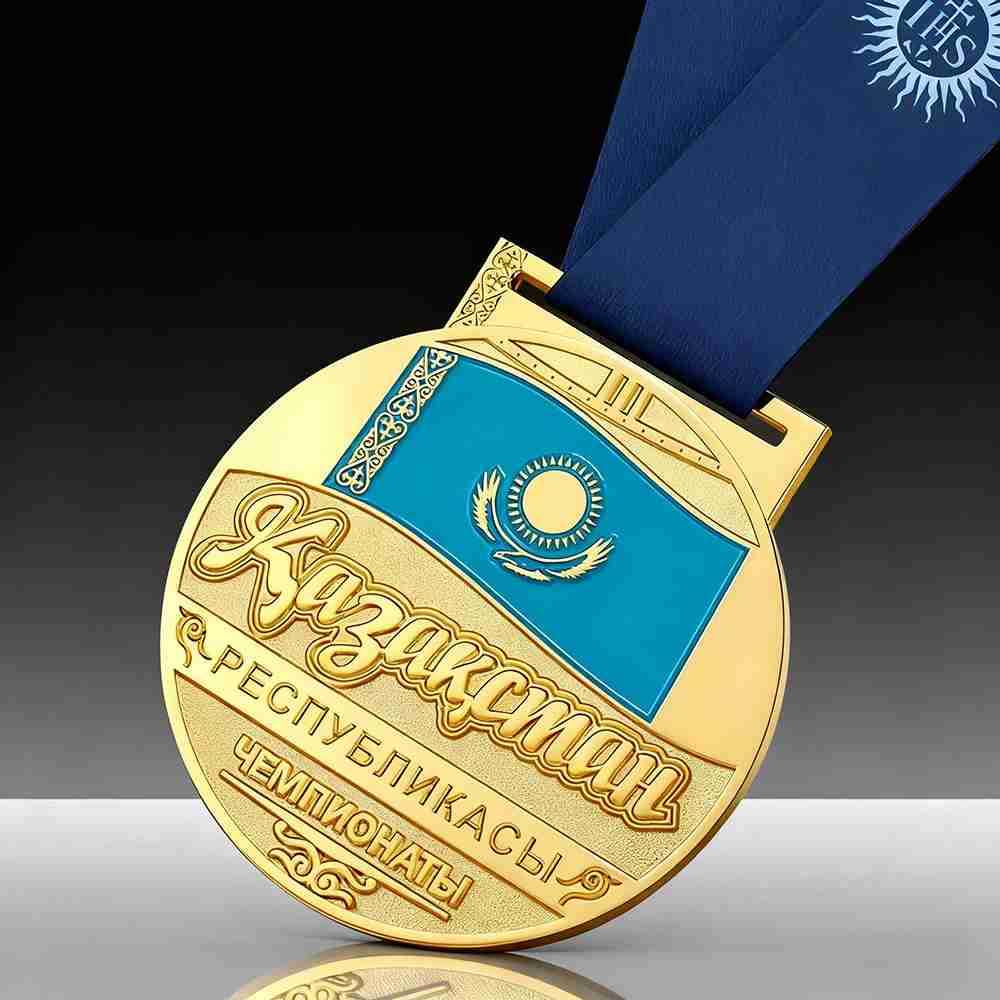
A finished sample brings together features that a screen preview cannot establish. Its actual relief, edge feel and surface appearance let the event team assess the combined result. For this development stage, Gold Valley provides design support, dedicated mold development and sample production, with revisions supported before the design is finalized.
The most useful sample review follows the medal’s visual priorities. Look first at the emblem, then the smallest lettering, then the edges and background. Tilt the sample under ordinary light and check both faces. Record any change against the specific feature so that approval has a clear physical reference.
Production inspection provides a further check after the design is settled. Our quality process includes incoming material, in-process and finished product inspection. These stages support control through manufacturing; they are not a promise that every possible defect has been eliminated. The approved sample remains a useful reference for appearance.
Clear Detail Depends on the Whole Process
Zinc alloy is useful for detailed medals because it combines castability with broad finishing options. The strongest result comes when relief geometry, clean release from the die and surface preparation support the same design. For the next medal program, evaluate that combination in a finished sample before extending it across the event’s awards.
If you are planning a detailed custom medal, please contact Gold Valley to review the relief profile, ribbon attachment and finish before mold development.
FAQ
Why choose zinc alloy for custom medals?
Its fluidity helps reproduce shaped surfaces, lettering and relief in a reusable die. It also accepts decorative finishes. Those properties make it useful for repeated medal designs, although the mold and finishing process still determine the result.
Can zinc alloy medals have deep 3D details?
Sculpted relief is possible, but usable depth depends on the geometry and tooling. Review how raised features join the medal body and how the casting will release. Greater depth alone does not ensure a clearer image.
Are gold-colored zinc alloy medals solid gold?
A gold-colored finish does not establish a solid-gold body. Zinc alloy is the base material in this construction. Confirm the specified plating or coating separately if the finish composition matters to the award description.
Does a thicker zinc alloy medal mean better quality?
Thickness alone is an incomplete quality measure. Uneven sections can complicate solidification, while unnecessary mass may add little to the design. Judge the relief, edge condition and finish alongside the medal’s intended feel.
What should a finished medal sample demonstrate?
It should let the team assess the actual design in its intended finish: readable lettering, distinct relief, an acceptable edge and the agreed overall appearance. Keep that sample available when comparing the production pieces.