How to Choose Between Soft Enamel Pins and Hard Enamel Pins
Time : Aug 20, 2026 View : 152
When a brand team needs a pin that looks right in a gift box, on a uniform, or in a retail display, the soft-versus-hard enamel decision affects more than appearance. The surface, edge definition, wear expectation, artwork, and budget all move together. This guide gives buyers one practical way to match the finish to the job before approving a sample.
The finish changes the buying brief
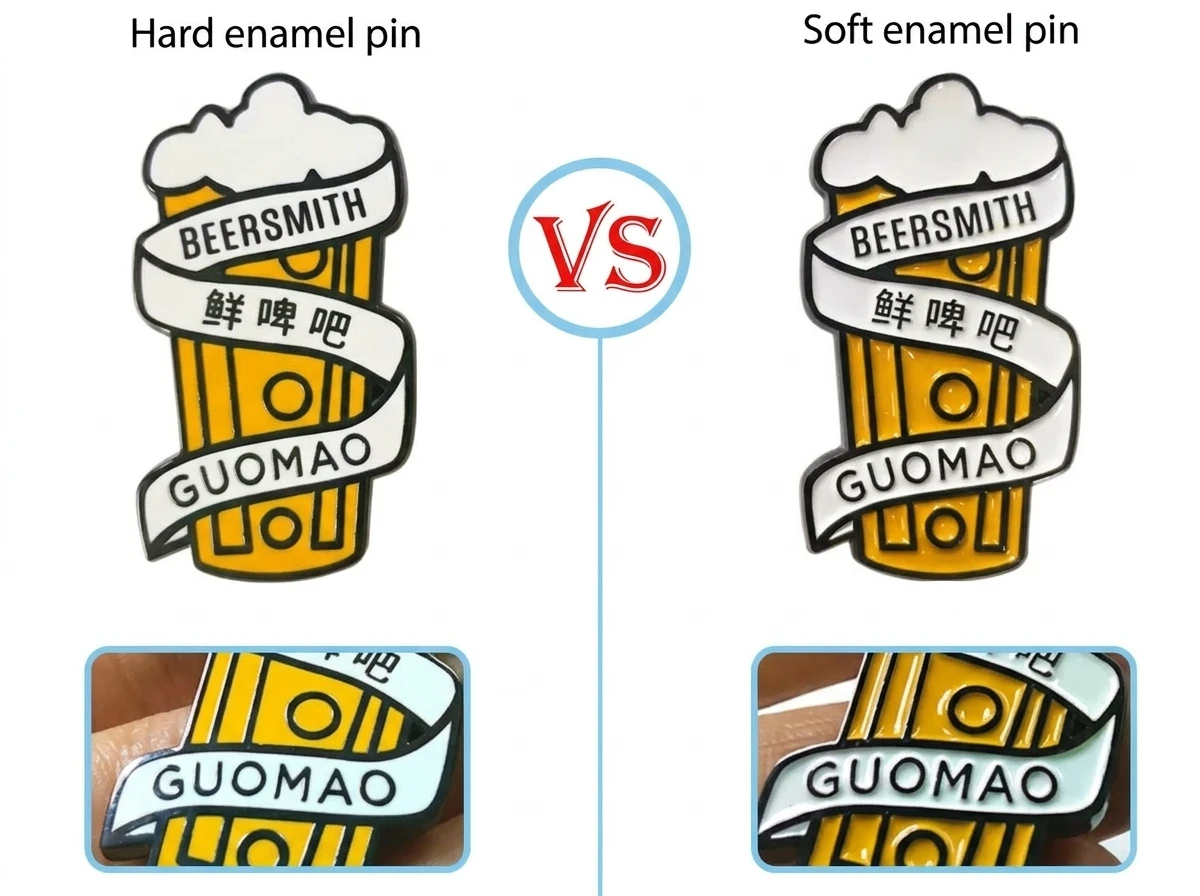
The useful question is not which enamel process is universally better. The useful question is what the pin must communicate and how it will be handled after delivery. Soft enamel leaves colored areas below raised metal lines, creating a tactile, dimensional look. Hard enamel is polished flat so the metal lines and color sit on one level, giving the piece a cleaner, more premium face.
For a park souvenir or promotional giveaway, soft enamel can make a simple logo feel more characterful. For a corporate recognition pin or formal uniform accessory, the smooth face of hard enamel may better support a restrained brand system.
Two questions to settle before quoting
First, ask where the pin will live. Frequent contact with clothing, bags, display trays, or other metal pieces makes scratch visibility and edge feel important. Second, ask what the artwork contains. Fine lines, small type, open negative space, and a bold cartoon outline can behave very differently once metal borders and color fields are applied.
For teams comparing custom enamel pins across several suppliers, the most useful sample is one that keeps the artwork, size, plating, and backing identical while changing only the enamel process.
How the two surfaces behave in production
The process difference is easiest to judge through the production sequence. A custom pin moves from design and mold development through metal processing, polishing, electroplating, coloring, inspection, and packaging, so review a sample as a complete object rather than as a color chip.
Soft enamel: texture with visual depth
Soft enamel places color below the raised metal borders. The recessed fields catch light differently from the lines, which helps logos, mascots, and illustrated artwork feel more dimensional. The trade-off is tactile: the surface is not flat, so the buyer should confirm that this texture suits the intended handling and cleaning conditions.
Hard enamel: a polished, even face
Hard enamel fills the color fields and is polished until the face is smooth and level with the metal lines. That finish supports a crisp, premium presentation and is often easier to wipe clean. It can be a strong fit when the pin must sit comfortably against fabric or when the design depends on a calm, uninterrupted surface.
A capable custom enamel pin manufacturer should show both finishes using the same artwork, because the comparison is clearest when shape, plating, and color are held constant.
|
Decision point |
Soft enamel |
Hard enamel |
|
Surface feel |
Raised lines and recessed color; tactile depth |
Smooth, level face; polished appearance |
|
Artwork fit |
Bold icons, mascots, and expressive outlines |
Fine details, formal marks, and premium branding |
|
Common buyer priority |
Visual character and cost balance |
Refined presentation and easy surface cleaning |

Quality checks that matter more than the label
The process name does not replace inspection. Check whether the delivered pin matches the approved sample in outline accuracy, color boundaries, plating tone, edge smoothness, backing security, and packaging condition.
A practical review sequence
Use the following sequence when samples arrive:
Compare the physical sample with the approved artwork and rendering.
Check raised edges, recessed fields, corners, and small lettering by touch and sight.
View several pieces together to identify color or plating variation.
Confirm the backing, attachment point, and individual packaging before sign-off.
Gold Valley uses a three-stage inspection system covering incoming materials, in-process work, and finished goods before shipment. We also maintain product identification and traceability controls, so a buyer can ask how an approved sample is carried through production and final release. Our broader quality system follows ISO 9001:2015, while our environmental management system follows ISO 14001:2015; our product controls also address RoHS requirements.
Compliance still belongs in the buying brief
For overseas brand programs, finish selection is only one part of risk control. Buyers may also need evidence that the factory can support audits, manage artwork, record nonconforming product, and respond to shipment issues. We hold Disney Facility and Merchandise Authorization, NBCUniversal factory audit waiver and production approval, and have passed a Sedex ethical trade audit under SMETA 6.1.
What to put in the sampling brief
A concise brief reduces back-and-forth. Include:
The final artwork, color references, size, plating tone, and backing type.
The intended audience and handling context, such as retail, uniform, event, or gift box.
The preferred process plus one acceptable alternative for comparison.
Packaging expectations and any audit, environmental, or traceability documents needed.
For a wider range of metal and plastic formats, buyers can review our product collection before narrowing the sample brief to the exact pin construction.
The practical decision
Choose soft enamel when tactile depth, bold artwork, and budget balance matter most. Choose hard enamel when the pin needs a smooth, polished face and a formal or premium feel. Approve either finish with a like-for-like sample and check the quality system behind it.
If the artwork, audience, and handling context are ready, we can help turn the brief into a side-by-side sample plan and document the quality checkpoints before bulk production.
FAQ
Is soft enamel lower quality than hard enamel?
No. They create different surfaces for different design and use goals. Soft enamel emphasizes raised lines and recessed color, while hard enamel creates a smooth polished face. Quality depends on accurate artwork, controlled processing, inspection, and whether the selected finish fits the use case.
Which finish is better for a corporate logo pin?
Hard enamel is often a natural starting point when the logo is formal and the buyer wants a smooth, premium presentation. Soft enamel can work well when the identity is more expressive or when tactile depth is part of the design language. A physical side-by-side sample is the fairest final test.
Can the same artwork be sampled in both finishes?
Yes. Keeping the artwork, dimensions, plating, and backing consistent makes the finish comparison meaningful. The buyer can then judge color boundaries, line definition, surface feel, and overall impression without unrelated design changes affecting the decision.
What should a buyer inspect on a pin sample?
Inspect outline accuracy, color fill, plating tone, edge smoothness, small details, backing security, and packaging. Review several pieces together as well as one piece close up. Ask how incoming materials, in-process work, and finished goods are checked before shipment.