How to Keep Custom Challenge Coins Consistent
Time : Aug 13, 2026 View : 131
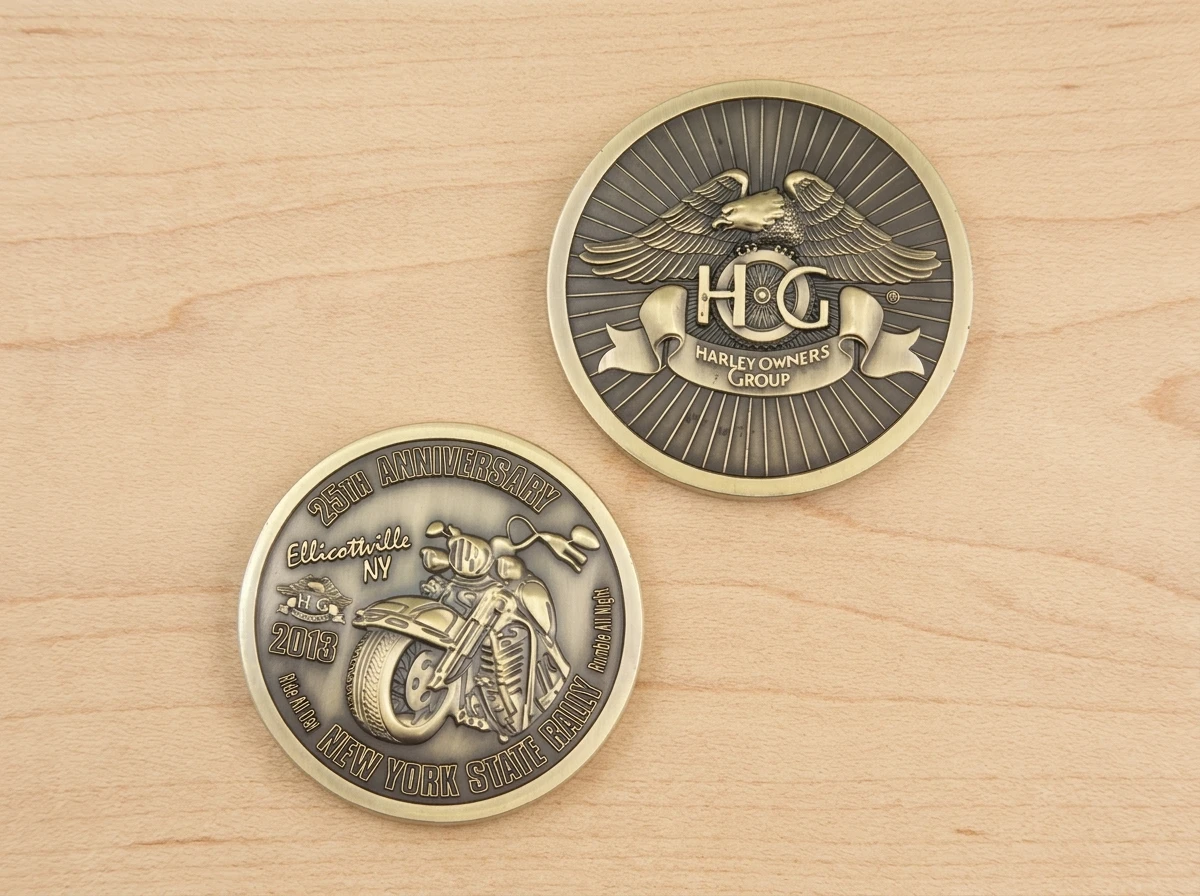
A challenge coin can look perfect in a sample and still drift during a long production run. The risk is a chain of undocumented decisions about artwork, mold relief, plating, color, and packing. This framework shows buyers how to turn an approved sample into an auditable reference, inspect each handoff, and keep quality conversations specific. The goal is simple: every batch of custom challenge coins should tell the same story as the first approved piece.
The first control point is the approved design
Consistency begins before metal is cut because teams can only repeat visible decisions. A short brief should identify the coin’s purpose, key symbols, text hierarchy, edge treatment, base metal, plating color, enamel areas, and packaging expectation. A buyer searching for a reliable challenge coin design is trying to prevent ambiguity later; the artwork is the first quality document, not just a sales visual.
Freeze the visual brief
Mark every choice that could affect appearance or fit. Keep one controlled master file and record the revision beside every change. If a logo is too fine for the relief, resolve it now rather than letting an operator simplify it on the floor. State which details are non-negotiable and which may be adjusted for manufacturability.
- Artwork file and revision date
- Approved dimensions, thickness, and edge profile
- Named plating and color references
- Text, logo, and relief details that must remain legible
Make the sample a production reference
A sample is useful only when both sides agree what it represents. Record its approval date, artwork version, finish combination, and permitted tolerance. Photograph the front, back, edge, and packaging from repeatable angles. Later lots can then be compared with a known standard instead of memory or a compressed chat image, and a mismatch can be assigned to the mold, surface treatment, or handling.
Trace every handoff that can alter the coin
The middle of the process is where an approved idea becomes a physical object, so traceability must follow the handoffs. Gold Valley’s flow connects design and mold development with metal processing, polishing, electroplating, coloring or epoxy coating, inspection, packaging, and shipment. Each step should record who approved it, which version was used, and what was checked.
|
Stage |
Record to keep |
Acceptance question |
|
Artwork |
Approved vector, color notes, wording |
Can a new operator reproduce the same intent? |
|
Mold |
Mold version and confirmation date |
Does the cavity match the approved silhouette? |
|
Metal work |
Material and deburring check |
Are edges safe and details fully formed? |
|
Finish |
Plating, enamel, or coating batch |
Do color, gloss, and relief match the sample? |
|
Shipment |
Final inspection and packing record |
Is the released lot complete and protected? |
A supplier’s challenge coin production record should connect the lot number to the mold, material, finish batch, inspection result, and packing count. If a color or edge problem appears, the team can isolate the affected handoff and correct the cause without reopening earlier decisions.
Inspect in three passes, not one
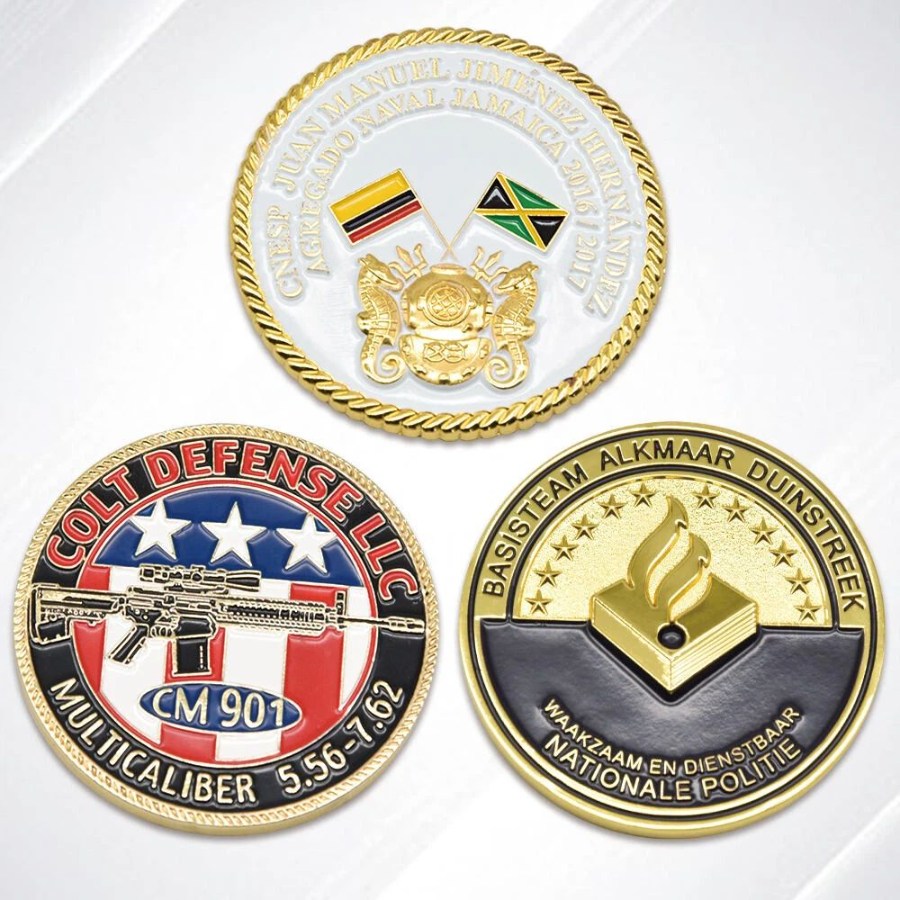
A final visual glance is too late to protect a custom project. Gold Valley uses incoming-material, in-process, and finished-product inspections. Each pass asks a different question: are the inputs right, is the process stable, and is the released lot complete?
Incoming material
Incoming checks confirm that metal, consumables, and packaging match the job. The record should identify the material family—zinc alloy, iron, brass, copper, or stainless steel—and flag any substitution before machining or molding. Early rejection is clearer than explaining a finished coin that feels or plates differently.
In-process finish and assembly
In-process checks focus on details that disappear once the next operation begins. Inspect relief depth, edge smoothness after polishing or deburring, plating coverage, color fill, and raised or recessed artwork. Dated records with operator and equipment identifiers help distinguish a handling mark from repeatable process drift.
Pre-shipment release
The release check should compare the finished lot with the sample and verify quantity, mixed designs, accessories, labels, and packing. A second check in the packing area catches damage after inspection. Photographing sealed cartons and retaining the count closes the loop between approval and delivery.
Ask for records that explain a deviation
A buyer does not need a document for every screw, but should request the records that make a deviation diagnosable. When evaluating a custom challenge coin manufacturer ask for a compact quality pack that includes:
- The approved artwork and sample photos used for release
- Material, mold, and finish identifiers tied to the production lot
- Incoming, in-process, and final inspection results
- Nonconformance notes and corrective-action decisions, if any
- Packing count, carton identification, and shipment release date
These records keep the conversation factual. If a buyer reports a mismatch, the factory can trace the affected lot, compare the evidence, and decide whether to rework, replace, or adjust the process under the contract. Traceability is therefore a service capability, not paperwork added after a problem.
Quality credentials matter when they support the workflow
Credentials are useful when they reinforce the controls a project already needs. Gold Valley’s manufacturing facility holds ISO 9001:2015 quality-management and ISO 14001:2015 environmental-management certification. It has passed the Sedex SMETA 6.1 ethical-trade audit and holds Disney Facility and Merchandise Authorization plus NBCUniversal factory audit waiver and production approval. These are facility-level qualifications, not a substitute for inspecting your coin; they show an environment where records, corrective actions, and responsibilities are maintained.
For European and American programs, confirm the compliance scope for the finished item and any electronic feature. RoHS rules restrict hazardous substances in electrical and electronic equipment, so a plain metal coin should not be described as an electronic-compliance product simply because a factory maintains environmental controls. This scope discipline is part of what buyers mean by quality challenge coins.

Consistency Is a Process You Can Audit
The practical takeaway is to treat the approved sample as the start of a controlled chain: freeze the design, record each handoff, inspect inputs and process output, and release against evidence tied to the lot. That gives project owners a defensible answer when a batch differs and factories a precise route to correction. For a new commemorative program, share the artwork, finish priorities, and inspection expectations with Gold Valley through the contact Gold Valley team before the mold is confirmed.
FAQ
How early should the reference sample be approved?
Approve it before the mold is released. Name the artwork revision, dimensions, finish, and permitted tolerance so later checks have one reference.
What should a challenge coin inspection cover?
Check material, dimensions, relief, edge feel, plating, color fill, text, accessories, quantity, and packing against the approved design and contract.
Which records help trace a quality issue?
Link the artwork revision, mold identifier, material and finish batches, inspection results, corrective action, packing count, and shipment release to one lot.
Does a factory audit replace product inspection?
No. An audit evaluates a facility’s management and compliance systems; product inspection confirms that your coin matches the sample and shipment requirements.