Press to Unwind: A Buyer’s Guide to Custom Mechanical Keyboard Keychains
Time : Sep 04, 2026 View : 130
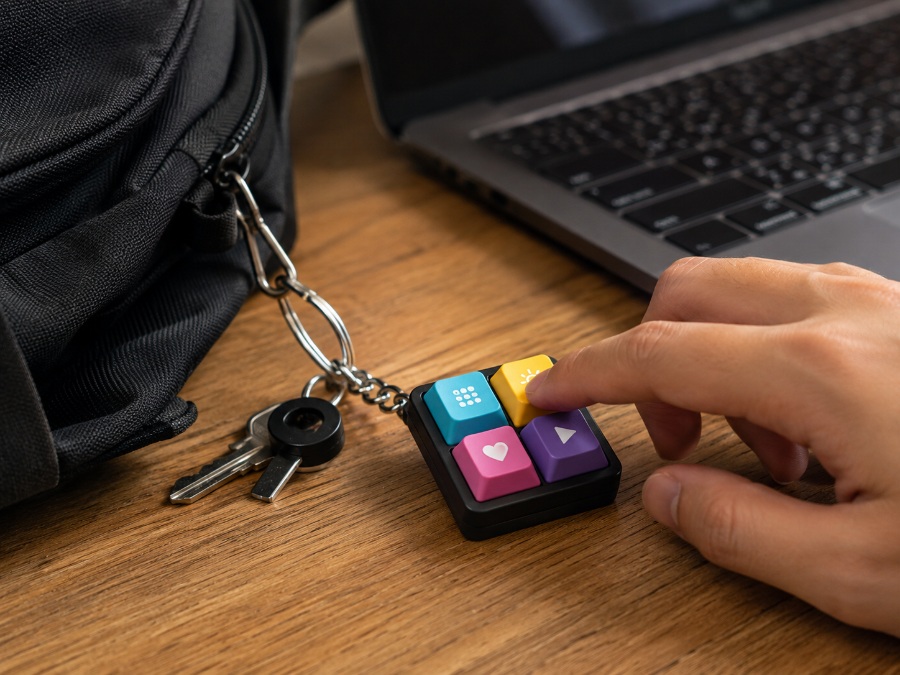
Press a key, hear the click, and let a little pressure go. A mechanical keyboard keychain turns a familiar fingertip action into a pocket-size “relax button” for a fast-moving day. That appeal works well in promotional merchandise, but the real value goes beyond the first click. Key count, material, switch feel, case structure, optional electronics, hardware, artwork, and packaging all affect the result.
The product works best as a small assembly rather than a novelty with a ring attached. A good sample reveals how every layer works together before production.
Start with the five-layer structure
The visible keycap is only the beginning. Under it sits the mechanical system that creates the resistance, rebound, and crisp sound expected from a keyboard-style clicker.
The first layer is the keycap. ABS or PBT are available according to the project specification. These environmentally considerate materials offer good wear resistance and a firmer, more substantial feel, while providing the main surface for colors, letters, icons, mascots, or logo details.
The second layer is the mechanical switch. It connects beneath the keycap through the cross-shaped stem and is secured into the positioning structure. This component determines pressing resistance, rebound, and click character.
The third layer is the base or case. Clear acrylic or PC forms the transparent housing, holds the switches in position, provides internal space, and creates the load-bearing point for the hanging hardware.
The fourth layer is optional: the electronic module. Depending on the version, it may include a battery, LED elements, a sound chip, a recording chip, and a PCB. The fifth layer is the hardware assembly, such as an eye screw or case opening, spring chain, ring, or swivel clasp. This hardware is part of the structure rather than a separate finishing detail.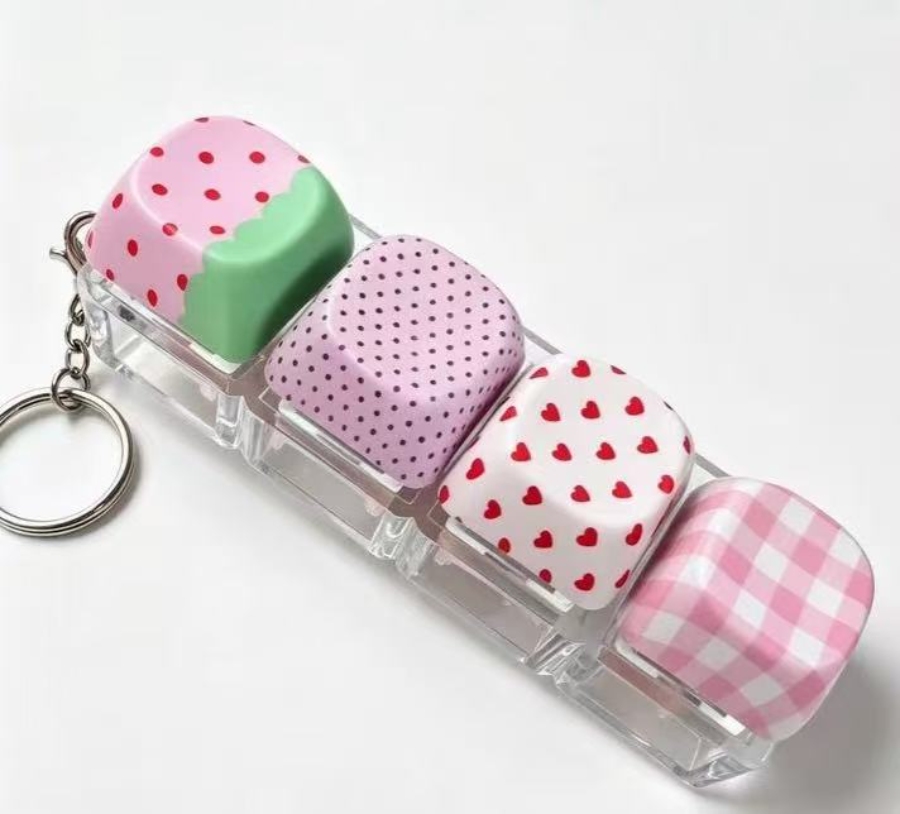
One key or nine: let the brief decide
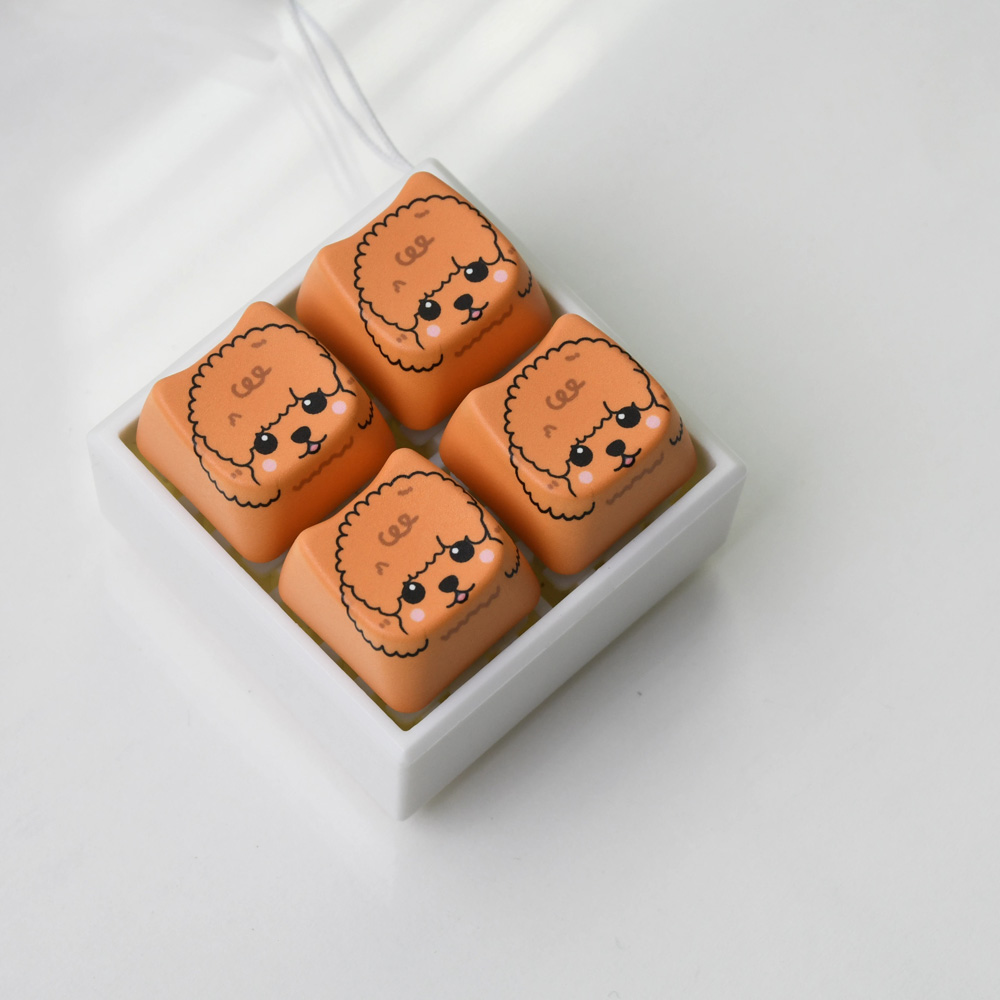
This product is not limited to four keys. Configurations from one to nine keys are available according to the customer’s preferred format, artwork, and interaction.
A one-key version works well for a symbol, command, mascot face, or campaign message. Two or three keys create a short sequence. Larger layouts give brands room for color coding, initials, character expressions, gaming references, or miniature control-pad concepts. The useful question is which layout gives the artwork enough space without making the object unnecessarily large.
Key quantity is best finalized before artwork and sampling because it affects switch count, keycap positions, case dimensions, graphic layout, and packaging fit. Keeping the approved configuration consistent across the sample, specification, and bulk order helps avoid unnecessary changes.
Optional sound adds another layer of character
Some versions do more than produce a mechanical click. Cute sound editions play animal calls or other preset effects, while customer-specific audio is also available for a campaign, character, event, or promotional theme.
Sound requirements are best defined early. The sample is the right place to verify audio type, playback method, button behavior, volume expectations, and module fit.
There is also a recordable option. It works well for gift programs by supporting a short personal message, greeting, joke, or meaningful phrase. Recording and playback need to feel simple, reliable, and compatible with the mechanical press.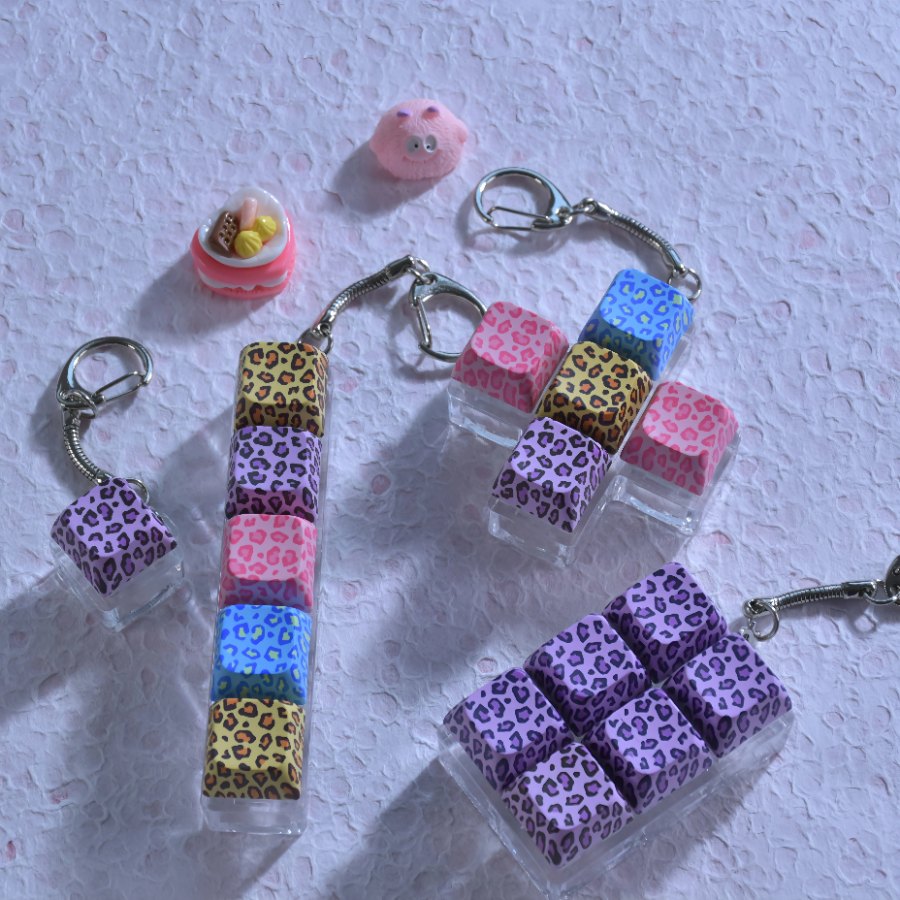
LED versions add a visible response
LED lighting gives the keychain another layer of feedback. It highlights the transparent case, fits gaming or technology themes, reinforces campaign colors, and makes character merchandise feel more animated.
The lighting layout works together with the case and internal electronics. Brightness, light distribution, switch operation, battery placement, and the final assembled effect are all visible in the sample.
Customization follows the real component layout
A custom keychain works best when the design follows the real component layout instead of treating every visible surface as an empty billboard. The keycaps move, switches need clearance, the case holds the structure, and the hanging point carries force. Artwork must respect those functions.
For multi-key designs, individual caps may use different colors, symbols, letters, or character details, while the complete layout still needs to read clearly.
Material accuracy matters too. The actual specification includes ABS or PBT keycaps, mechanical switches, an acrylic or PC case, optional electronic components, and metal hanging hardware.
What the sample needs to prove
A rendering shows color placement, but it does not reveal how the finished assembly behaves. The physical sample makes key alignment, pressing resistance, rebound consistency, case fit, artwork clarity, attachment strength, hardware movement, and packaging fit easier to judge.
Electronic versions also need a full function check: repeated sound playback, recording and replay, LED performance in normal and lower light, and battery placement that does not distort the case or change the pressing feel.
A capable custom keychain supplier connects sample approval with production control. Gold Valley supports sample production, customization, packaging, incoming-material inspection, in-process quality control, pre-shipment finished-product inspection, and product traceability. Those controls matter when one item combines mechanical, plastic, electronic, and metal parts.
From sample to bulk production
Reliable custom keychain manufacturers stand out in how they manage drawings, samples, component specifications, assembly, inspection, packaging, and changes after approval. A nine-key version with sound, LEDs, and special packaging creates more coordination points than a basic one-key version.
A clean one-key clicker may be right for a simple campaign. A multi-key light-and-sound version may suit a gaming launch or character program. What matters is that the chosen structure can be reproduced consistently in bulk.
FAQ
Does each key support a different color or graphic?
Yes. Individual keycaps may use different colors, letters, icons, mascot details, or logo elements. The full layout is best approved before sampling so every position matches the artwork.
Is the product limited to four keys?
No. One-to-nine-key configurations are available according to the customer’s preferred design and project requirements.
Are custom sounds available?
Yes. Sound versions support preset effects, including animal calls, as well as customer-specified audio. The exact function is finalized during sampling.
Is voice recording available?
Recordable versions support short voice messages, making them suitable for gift concepts that need a personal touch. Recording and playback are verified in the sample.
What needs to be finalized before mass production?
Finalize key quantity, keycap material, switch feel, case structure, artwork, hanging hardware, packaging, and any selected LED, sound, or recording functions. The approved sample then becomes the practical reference for the bulk order.